
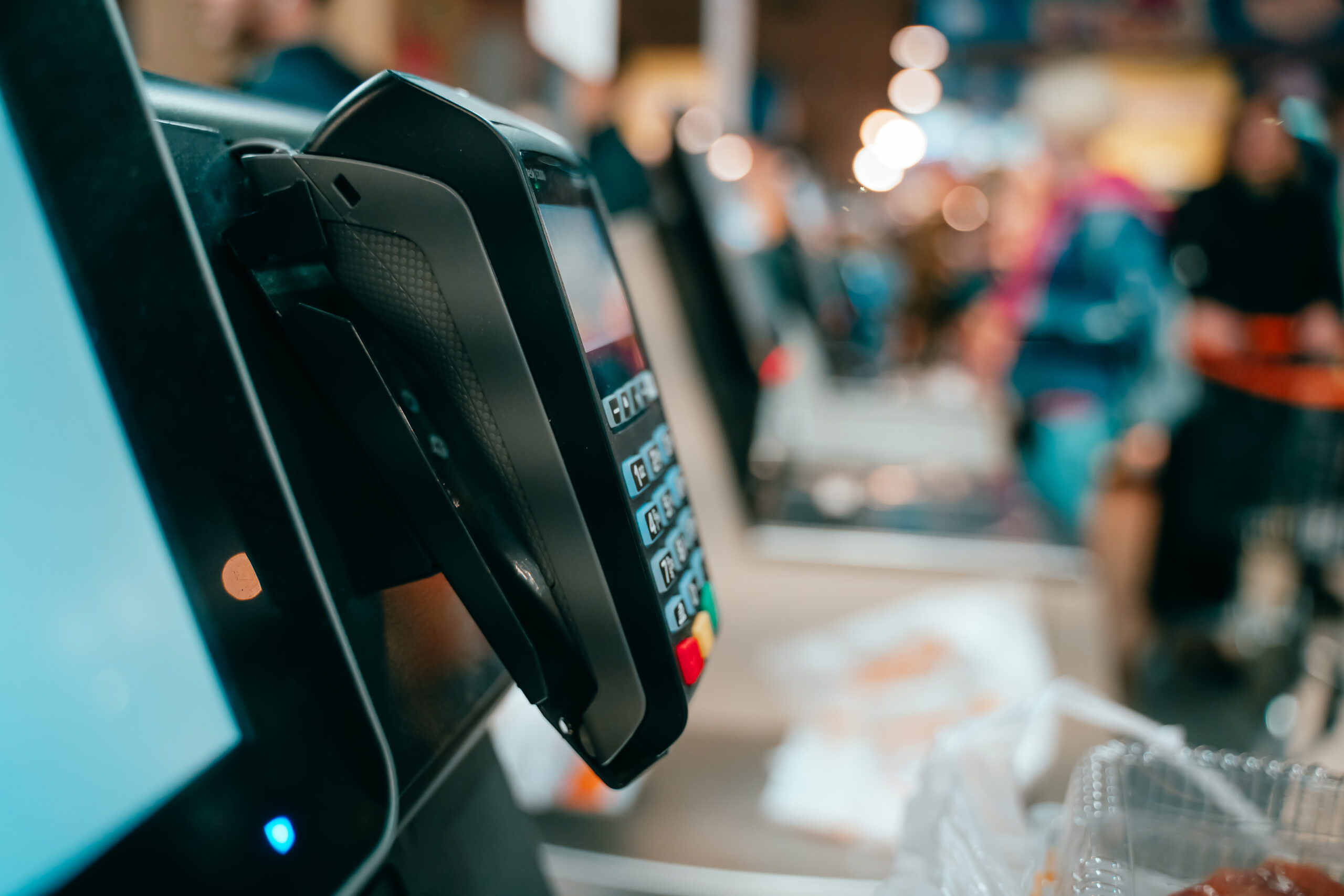
How Integrated Payments Can Increase Profit Margins for Independent Grocery Stores
Margins in independent grocery stores are tight.
Between rising supplier costs, labor challenges, shrink, and competition from big-box chains, every percentage point matters.
Yet many store owners overlook one of the biggest profit levers in their business:
How their payments are processed.
If your POS system and payment processor operate separately, you could be losing money every single day without realizing it.
Let’s break down how integrated payments can directly improve profit margins for independent grocery stores.
What Are Integrated Payments?
Integrated payments mean your payment processing system is fully connected to your POS.
Instead of:
- Ringing up a sale
- Manually entering totals on a separate terminal
- Reconciling reports from two systems
- Troubleshooting mismatched batches
Everything happens in one seamless flow.
The transaction, reporting, fees, and reconciliation all live inside your POS ecosystem.
1. Reduced Human Error = Reduced Revenue Loss
When POS and payment terminals aren’t integrated, cashiers often:
- Manually key in totals
- Re-enter transactions after mistakes
- Handle duplicate charges
- Process incorrect refunds
Even small errors add up.
Integrated payments eliminate manual entry. The sale total flows automatically to the PIN pad. That means:
- Fewer chargebacks
- Fewer refund mistakes
- Fewer voids
- Faster checkout
Less error = less lost revenue.
2. Faster Checkout = Higher Throughput
In grocery, speed matters.
A slow checkout line can:
- Frustrate customers
- Reduce repeat visits
- Cap your hourly sales volume
Integrated payments reduce transaction time because:
- No rekeying totals
- No waiting for terminal communication errors
- No duplicate authorization attempts
Even saving 5–10 seconds per transaction can significantly increase throughput during peak hours.
More transactions per hour = more revenue without increasing labor.
3. Simplified Reconciliation Saves Administrative Time
How long does end-of-day reconciliation take in your store?
If your team has to:
- Compare POS totals with terminal batches
- Investigate mismatches
- Manually match deposits
- Call processors to track down discrepancies
That’s expensive administrative time.
With integrated payments:
- Sales and batches match automatically
- Deposits are easier to track
- Reporting is centralized
You reduce back-office labor and management headaches.
Time saved = payroll savings.
4. Clearer Fee Visibility = Smarter Financial Decisions
Many independent grocers don’t fully understand:
- Their effective rate
- Interchange categories
- Markups
- PCI compliance fees
- Gateway fees
When payments aren’t integrated, reporting is often scattered and confusing.
An integrated system gives you:
- Transparent reporting
- Easier fee tracking
- Cleaner batch reconciliation
- Better visibility into true processing costs
When you can see the numbers clearly, you can negotiate better and make smarter financial decisions.
5. Reduced Downtime Risk
Disconnected systems increase failure points.
When:
- The terminal goes offline
- The gateway disconnects
- The POS and processor stop communicating
You’re stuck.
And downtime in grocery is expensive.
Cloud-based, fully integrated systems reduce complexity and lower the risk of payment disruptions.
More uptime = more consistent revenue.
6. Better Customer Experience = Higher Retention
Customers expect:
- Tap-to-pay
- Apple Pay / Google Pay
- Fast EMV processing
- Clear digital receipts
Integrated payments provide a smoother checkout experience.
A smoother experience means:
- Higher satisfaction
- Fewer complaints
- More repeat customers
Retention is far more profitable than acquisition.
7. Lower Long-Term Technology Costs
When your POS and processor are separate, you often pay for:
- Gateway integrations
- Third-party support
- Middleware
- Additional hardware
- Separate service contracts
Integrated systems reduce these overlapping costs.
One ecosystem.
One support team.
One streamlined solution.
Less complexity means lower long-term operational expenses.
The Real Impact on Profit Margins
Let’s look at this practically.
If integrated payments help you:
- Increase checkout speed by 5%
- Reduce payment errors by 2%
- Save 5–10 admin hours per week
- Improve customer retention by even 1–2%
That compounds.
For an independent grocery doing $2–5 million annually, small operational efficiencies can translate into tens of thousands of dollars per year.
And that drops straight to the bottom line.
What Independent Grocers Should Look For
When evaluating payment integration, ask:
- Is this truly integrated, or just “compatible”?
- Are there hidden gateway fees?
- Is reporting centralized?
- Is support unified, or split between vendors?
- Is it cloud-based?
True integration isn’t just about convenience, it’s about profitability.
Final Thoughts
Independent grocery stores don’t have the luxury of wasted margin.
Every inefficiency compounds.
Every disconnected system creates friction.
Every manual process adds cost.
Integrated payments aren’t just a technical upgrade, they’re a strategic financial decision.
If you’re evaluating your current setup and want to understand how much inefficiency may be costing your store, it may be time to take a closer look.
Because in grocery, protecting margin isn’t optional, it’s survival.
Want to see what a grocery-first POS looks like in action? Reach out for a quick demo and see how the right tools can simplify your store, reduce shrink, and boost profitability.